Scenes from last brew day

I’m still brewing on a proto-tier system and taking notes about the height, usability and relationships between vessels so I’ll know exactly where I want things before I make them static. I used to be somewhat sensitive about that state of my “brewery,” until I started looking at other people’s tiers on the internet. Now the white towel rack from our first apartment no longer embarrasses me. And I know it’ll be retired soon after a second productive career.
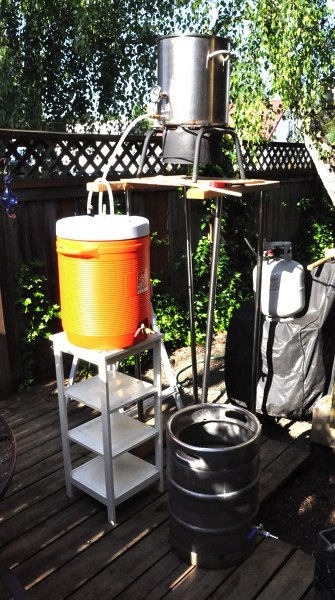
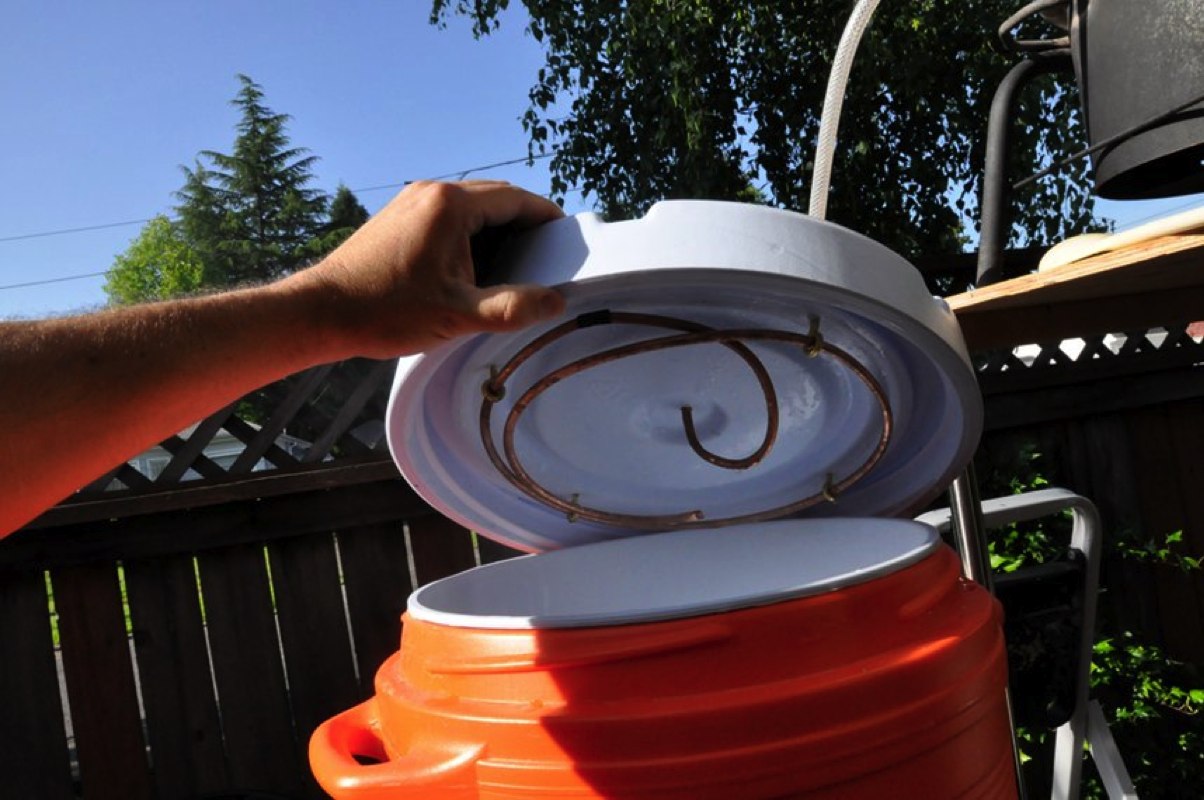
I started heating water in the HLT at 6 am on Monday (it was light and so very nice out) and was really happy working in the quiet and cool morning, and I’ve grown so very fond of brewing outside, so I’ve got to make sure this system is still portable and can be broken down to store and transport. As I was setting up and breaking down, I started to realize how many piecemeal items that were added along the way can be made a permanent fixture and save time. I also realized that my wort chiller needs some modification to work in my new brew kettle.

Oh, and I still dislike pelletized hops. Such a mess.

Stan, Stan, He's our Man Cream Ale

My grandfather passed away last weekend, and he was a big fan of my brewing, even if only in theory. He still hadn’t opened the IPA I brewed for my wedding nearly 8 years ago so he could show people the bottle. He was more of a macro-drinker, and combining that with his being Nebraskan and his love of cream can dinners, it only seemed appropriate to brew a cream ale of the pre-prohibition style.

I’m not going to stick with period ingredients, but I think he’d be happy enough with the results to keep a bottle on his desk well beyond the “best by” date.

I’ve not used corn before, so this will be yet another adventure.

Grain

  • 7 lbs Pilsner Malt
  • 3 lbs 2-Row
  • 1 lbs flaked corn
  • 0.5 lbs Carapils

Hops

  • 1 oz. NZ Saaz @ 60 min (4% alpha)
  • 1 oz. NZ Saaz @ 10 min
  • 1 oz. NZ Saaz @ 5 min

Should be interesting. I’ll probably just stick with Safale S-05.

These pipes are clean!

I’ve been meaning to get a draft cleaning kit going for nearly 4 years. I’ve gotten away without simply because I (we) manage to drink the beer quickly enough that by the time the detritus and germs seriously affect flavor, there’s nothing left to taint. However, I recently had a pony keg of Laurelwood Hop Monkey on since I didn’t have any active brews, and since it lasted longer, the flavors were seriously injured by the end.

So I purchased Micromatic’s basic hand-pump cleaning system and am going to aim for a weekly line cleaning. The process is frighteningly simple and should make for better draft product coming out of my refrigerator door.

The first time I tried it though, I was also watching both girls. I was getting interrupted every 2.5 minutes, so I had to constantly wash my hands to make sure all the caustic was off, put out an emotional fire, then get back to the lines. It took a little longer than I expected, but real world results usually differ from “ideal conditions.”

Hop planting

Yesterday Ella and I cleared some ivy off the south fence and turned some compost in to the soil before plating two rhizomes. I’ve grown hops in the past, but when we moved to NoPo, someone stole the 1/4 barrel keg I was growing them in, and I’ve not planted since.

We picked up our rhizomes from Portland Nursery, who sells around 8 potted varieties for $7 each. A little pricier than getting them from someplace like Freshops, but we were in the neighborhood and I love Portland Nursery. I got my first Nugget rhizome there a few years ago, but this year they have a wider selection of hops. I went with a Willamette (to stave off a shortage), and a Centennial. Ella picked Centennial over Cascade, but wasn’t to interested in learning the potential uses or characteristics and wanted to get back to putting gravel in the bird bath. (I cleaned it out, don’t worry)

Anyway, I hold high hopes for the plants. I love brewing fresh hop beers and will have two options this September.

March's Fermentation Friday

“How will you grow or change as a homebrewer this Spring? How will you embrace your Spring fever and channel it toward your homebrewing endeavors?”

Byron at homebrewbeer.net poses this month’s Fermentation Friday topic. I’ve been a little busy the last w months with a new baby, but that dovetails nicely with my change. I’m working on setting up a tiered brewing system that utilizes gravity’s sweet love to move water from the hot liquor tank in to the mash tun, and that same gravity to lauter the sweet wort in to the brew kettle.

Sure, there’s the initial investment of time to build the setup, but then I’ll be able to step away from the lauter with a little more confidence to interact with the kinders during the lengthy brewing process. And the research and design process is fun.

Oh, and I’m going to start brewing 10 gallon batches. I’m now set up to do so and look forward to having doubly productive brew days.

Trial and error

Today Rich and Brent stopped by to join in the brewing session. It was a slightly longer than normal session because I chose to modify several variables in the brew house. Not only did I try out a prototype tier system (fugly), I used my new kettle. Luckily, the gear-related problems were minor, and the major time consumer was actually a cold mash. My strike temp was too low, so we pulled off a gallon or so and reheated it before adding it back. This of course made it too hot, so I added water from the HLT and the hose when the HLT wasn’t quick enough, but that dropped it too much. After 2 more pseudo-decoction mashes, we finally go up to the right temperature and let it rest.

Rich brought over some great rye bread, so we stepped next door for some ham and swiss and had some fine sandwiches with a Green King Suffolk Strong Vintage Ale. Talk about a great lunch. The Suffolk Strong a blend of a pale and a strong ale aged in wooden vats for two years. It had a wonderfully sour woody flavor and gave off a delightful aroma. Literally like someone’s old, musty woodpile. Must be the Cooper in my lineage that makes that an attractive flavor.

Anyway, the lautering went quite well and we used Rich’s refractometer to watch the gravity and ended up boiling about an hour and a half later than I’d expected. Rich had to leave for another engagement so Brent helped me cool and rack the beer, which was problematic because something circumvented the false bottom and clogged the dip tube to the spigot.

Anyway, we came out at 1.058 and the wort tasted wonderful. So much sweater than usual, largely because it wasn’t obliterated by my usual overdoes of hops.

A Scottish

Michelle requested that I brew a Scottish ale what is now close to 4 weeks ago. It took a while to get the recipe, and a while longer to get the time to brew. Ella helped me shop for the ingredients this time. It was her idea to add some Marris Otter. While I measured my grains, she went to each bin at Steinbarts and sampled 1-2 malt kernels like I showed her. She made two laps around before I was done milling. Here’s the recipe.

Malt Bill

  • 9 lbs domestic 2-row
  • 2 lbs Marris Otter
  • 1 lbs Crystal 60L
  • 1/4 lbs roasted barley
  • 1/4 lbs peated malt
  • 3/4 lbs torrified wheat

Hop Bill (if you can call it that)

  • 1 oz. Santiam @ 60 minutes (5% alpha)
  • 0.8 oz Santiam @ 10 minutes (5% alpha)

Rest of the recipe was pretty predictable. Irish moss, Safale S-04, blah blah. The wort that I sampled for a gravity reading was delicious.